AI for Agriculture

Learn from Indian agri-business examples. Make product questions and field enquiries easier to organise, with expert advice where it matters.

Friendly AzentiKo assistant waving hello

A useful starting point for Indian businesses

Where Can AI Help Your Team?

Agriculture teams can use AI to organise farmer questions, explain product information and collect field observations. Weather, crop, pest, soil and financial decisions need local evidence, agronomist review and clear uncertainty.

Agri-businesses use AI with satellite images, sensors, weather and field records to support farmers and supply chains. Local conditions and farmer experience remain essential to every recommendation.

Explore Live Demo Options
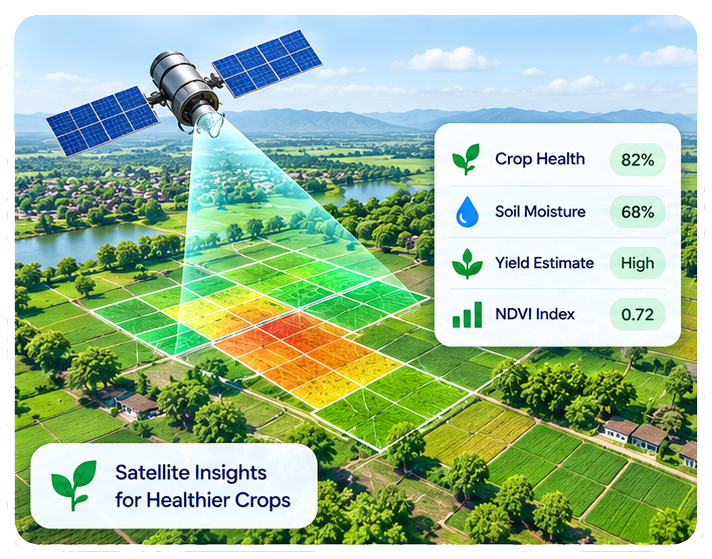
Illustrative crop-monitoring and field-review artwork
Illustrative industry artwork from our local assets. Not a customer deployment or proof of a product feature.

Learn from published work and clear ideas

Company Examples, Explained Simply

These names come from the supplied Indian enterprise reference. Published examples link to official company, technology-provider or public-service sources. Unconfirmed claims are labelled separately. None is an AzentiKo customer, partner or endorsement.

Reviewed . A historical publication does not confirm a service’s current availability or performance.

Cropin logo

Cropin

Published AI example

Cropin publishes OrbitAI and Cropin Cloud as agriculture intelligence products that use verified field, satellite, weather and domain data. Public product pages describe farmer, agronomy, sourcing and risk workflows with human-governed action.

What a Smaller Business Can Learn

An agri-business can combine field records with weather and imagery, then give a field officer a short list of areas needing attention. The useful design is explainable alerts plus local human follow-up.

Official Cropin product page opened; attachment performance figures are not used.

Cropin OrbitAI (opens in a new tab)
DeHaat logo

DeHaat

Published AI example

DeHaat’s Farm Intelligence page describes an AI engine using agricultural science, data science and machine learning for advisory and early-warning solutions. Its examples include crop-specific advice and weather or pest warnings. These published descriptions are not a guarantee of accuracy in every field.

What a Smaller Business Can Learn

A farmer-service team can use a multilingual assistant to answer routine questions and route crop problems to an expert. Local-language support is useful only when the advice is checked for local crop and weather conditions.

Official product description. Local conditions and qualified agronomist review still matter.

DeHaat Farm Intelligence: AI, ML and Analytics (opens in a new tab)
Bijak logo

Bijak

Industry idea — AI claim not confirmed

Bijak operates a digital marketplace and information service for agricultural buyers and sellers. The public pages reviewed did not identify a named AI trader-rating product matching the attachment.

What a Smaller Business Can Learn

A trade platform can use an assistant to explain order steps, gather a quality or payment question and route it to operations. Credit, quality and dispute decisions should use transparent approved rules and human review.

Attachment claim not confirmed through an official named AI source.

Bijak agricultural marketplace (opens in a new tab)

Intello Labs

Published AI example

Intello Labs presents computer-vision tools for assessing produce quality from images and supporting quality workflows. Its public product information describes standardisation and digital inspection rather than a promise of fully automatic acceptance.

What a Smaller Business Can Learn

A packhouse can capture a consistent image, flag produce for review and record why a lot was accepted or rejected. The team should calibrate for crop, camera, lighting and local quality standards.

Official computer-vision positioning reviewed; exact deployments are not assumed.

Intello Labs quality technology (opens in a new tab)

Fasal

Industry idea — AI claim not confirmed

Fasal presents a connected farming platform using field sensors, weather data and advisory tools. The public pages reviewed did not provide a sufficiently specific official AI product or customer story to verify the attachment’s exact prediction claims.

What a Smaller Business Can Learn

A farm team can turn sensor readings into a simple irrigation or attention reminder, then let the farmer or agronomist decide what to do. Alerts should include timing, source and a way to report that field conditions differ.

Attachment claim not confirmed through an official named AI source.

Fasal smart farming (opens in a new tab)

Ideas you can plan with your team

Start With Everyday Customer Questions

These are illustrative workflows, not verified AzentiKo capabilities or measured customer results. Confirm the feature, data access and connection before implementing one.

Farmer support

An agri-input shop assistant explains product labels, storage and authorised usage from reviewed content, then routes crop-specific concerns to an agronomist.

A customer may ask
How should I store this product?

Order enquiry

A supplier assistant records seed, quantity, village and delivery timing, then asks the team to confirm stock and transport.

A customer may ask
Can you deliver this input to my village?

Field observation

A support assistant collects a photo request and basic crop details for an agronomist; it does not declare a disease from a single message.

A customer may ask
Who can review this crop problem?

A Practical Business Scenario

An agri team can use an assistant to answer crop-care questions, collect a field issue, explain a delivery status and send a case to an agronomist. Advice should show its source and date. The system should account for crop, soil, weather, language and local practice instead of giving one generic answer.

A small, sensible first step

Plan It. Test It. Then Decide.

Make the first workflow easy to check. Keep one person responsible for the information and the next action.

  1. Name the adviser

    Decide which agronomist or field team owns crop-specific answers.

  2. Keep labels current

    Use approved product, safety and usage information with dates and versions.

  3. Explain uncertainty

    Tell users when local weather, soil and crop stage can change the answer.

  4. Review images

    Treat photos as observations for a person to inspect, not automatic proof of disease.

  5. Record feedback

    Track questions and field outcomes carefully; do not promise yield or income improvements.

Keep the Limits Clear

AzentiKo is not a crop model, weather authority, agronomist, pesticide adviser or farm finance service. It must not prescribe treatment or promise yield.

Weather, pest and crop advice can affect income and safety. Treat AI output as guidance for review by an agronomist or trained field worker.

Check AzentiKo Features and LimitsPlan Your Data Connections

Common Questions Before You Start

Can AI identify a crop disease?

A chat assistant should not make a final diagnosis from a message or photo. Send the observation to a qualified agronomist with local context.

Can it give weather advice?

It may share a trusted forecast link or explain a published advisory, but local decisions need current field and weather information.

Can it guarantee yield?

No. Farming outcomes depend on many factors. Avoid claims about guaranteed production, savings or income.

Where should agri-businesses start?

Begin with product FAQs, order enquiries and safe escalation to field staff. Add decision support only after expert review.

Your next step

Bring Your Questions.
See What Could Work for Your Business.

Explore the examples or request a guided walkthrough. Our team can help you check the plan, setup and tools you need.

A demo request opens your email app. Your team and ours will agree the next steps.